

Welcome to the first installment of our new series focused on building strong, lasting relationships in both life and business. At Designed2Last, we believe meaningful connections do not thrive by accident; they are intentionally cultivated through emotional awareness, mutual respect, and consistent effort over time.
At the center of every thriving connection lies one essential pillar: trust.
Whether in romantic partnerships, friendships, family systems, or professional collaborations, trust forms the foundation upon which everything else is built. Without it, even shared goals and deep affection begin to weaken under pressure. With it, relationships gain stability, emotional security, and resilience.
In this article, we’ll explore how to intentionally develop Healthy Relationships by understanding and strengthening trust in practical, sustainable ways.
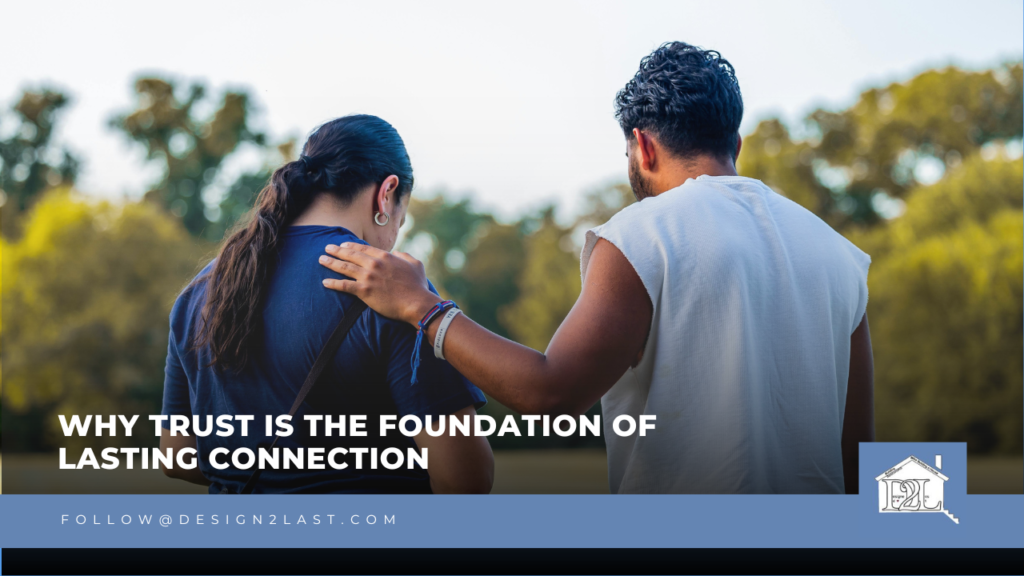
Why Trust Is the Foundation of Lasting Connection
Trust creates emotional safety, and emotional safety allows relationships to deepen naturally. When individuals feel secure, they communicate more openly, express vulnerability more comfortably, and navigate disagreements without fear of rejection or manipulation.
When trust is absent, however, doubt slowly replaces confidence. Minor misunderstandings escalate more quickly, and defensiveness begins to erode the connection.
This is why Building Trust in Relationships is more powerful than striving for perfection. Perfection is fragile and unrealistic; trust, when nurtured consistently, is durable. It allows relationships to bend without breaking when stress, change, or uncertainty arise.
At Designed2Last, our approach to Lasting Relationship Success emphasizes stability over intensity and intentional growth over temporary emotion.

Understanding What Trust Truly Means
Trust is often confused with blind belief or unquestioning loyalty, yet true trust is grounded in patterns of consistent behavior.
It involves:
- honest and respectful dialogue
- alignment between words and actions
- emotional safety and reliability
- accountability after mistakes
- consistency over time
In essence, trust grows when integrity becomes predictable. It is not declared; it is demonstrated repeatedly.
Developing Emotional Safety in Relationships requires intentional behavior that reinforces security rather than uncertainty.
Step 1: Practice Consistency in Everyday Actions
Trust is rarely built through grand gestures. Instead, it forms quietly through everyday reliability. Showing up when you say you will, honoring commitments, and communicating proactively all signal dependability in ways that words alone cannot.
In both personal and professional contexts, consistency reduces anxiety because it creates predictability, and predictability fosters safety.
Small broken promises accumulate subtly over time, weakening confidence. Conversely, small kept promises steadily reinforce trust and strengthen relational stability.
Step 2: Communicate with Transparency and Clarity
Open and respectful dialogue is one of the strongest accelerators of healthy communication patterns. When expectations are clearly expressed, and misunderstandings are addressed early, trust has room to grow without unnecessary tension.
Avoiding difficult conversations may feel easier temporarily, but silence often leads to assumptions, and assumptions frequently damage trust more than the honest truth ever could.
Strengthening effective communication in relationships allows transparency to replace confusion and confidence to replace doubt.
Step 3: Take Accountability Without Delay
No relationship is immune to mistakes or emotional missteps. What separates fragile relationships from resilient ones is not the absence of error, but the willingness to repair quickly.
When accountability is taken sincerely and without defensiveness, it communicates maturity and respect. A genuine apology paired with corrective action restores emotional safety more effectively than blame shifting.
Over time, this practice reinforces relationship resilience, allowing trust to deepen rather than deteriorate during conflict.
Step 4: Protect Emotional Safety
Trust flourishes where individuals feel safe to express concerns, needs, and vulnerabilities without fear of humiliation or dismissal.
Protecting emotional safety in relationships involves listening without immediate judgment, respecting boundaries, and refraining from weaponizing sensitive information during moments of disagreement.
When emotional safety is consistently preserved, vulnerability becomes natural, and intimacy strengthens organically.
Step 5: Allow Trust to Develop Gradually
Trust is not instant, and rushing it often creates artificial closeness without stability. Genuine trust grows through repeated positive experiences, reliable follow-through, and conflict handled with emotional maturity.
Patience is essential because sustainable trust is cumulative. Each reliable action reinforces the foundation, strengthening the relationship over time. This gradual process aligns with our commitment at designed2Last relationship guidance to build connections that endure rather than collapse under pressure.

Bringing It All Together
Trust is the pillar that supports every lasting relationship. Without it, connection becomes fragile and uncertain. With it, relationships gain the stability required to navigate change, disagreement, and growth together.
At Designed2Last, our mission to provide comprehensive relationship counseling services is centered on equipping individuals and couples with the tools necessary to cultivate enduring partnerships.
In our next installment, we will explore how effective communication in relationships strengthens bonds and transforms trust into a deeper connection and long-term collaboration.
Because what you build should never be temporary. It should be built to last.