
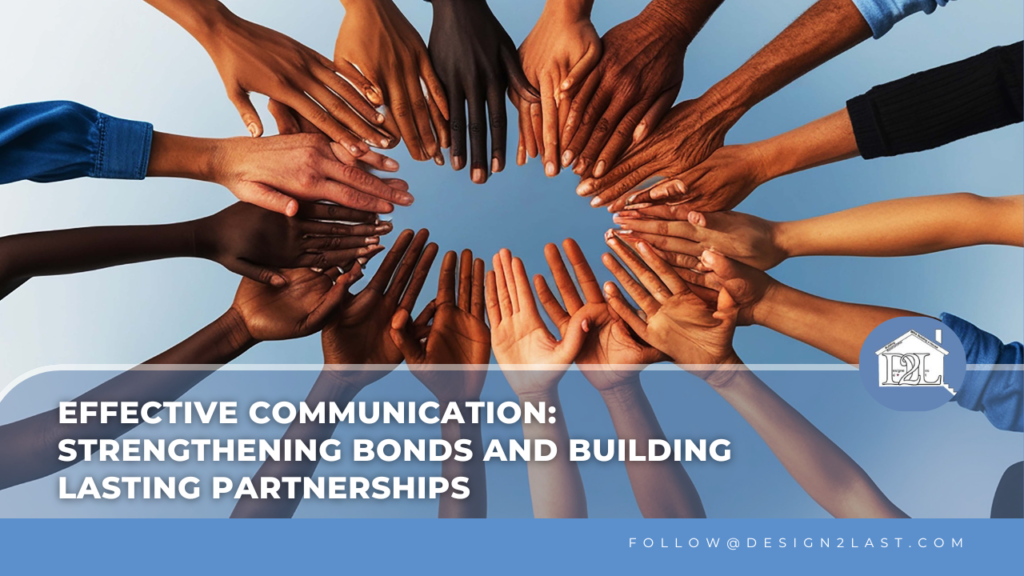
In our previous article, we explored the Pillar of Trust in Relationships and how intentional consistency, accountability, and emotional safety lay the foundation for lasting connections. Trust provides stability, but it is effective communication that transforms that stability into deeper connection, collaboration, and partnership.
Without communication, trust remains dormant; it exists as potential but never fully manifests in understanding, shared goals, or emotional intimacy. With communication, trust becomes living, breathing, and actionable — the glue that binds people together across all areas of life.
In this article, we’ll examine how to harness the power of Effective Communication in Relationships, ensuring that your personal and professional bonds grow stronger, more resilient, and capable of withstanding life’s inevitable challenges.

Why Communication is the Bridge Between Trust and Connection
Think of trust as the foundation of a house; communication is the bridge that allows people to move freely and safely within it. Trust alone creates stability, but without clear communication, misunderstandings creep in, assumptions accumulate, and relationships struggle to thrive.
Effective communication skills allow partners, colleagues, and friends to:
- Express needs clearly and respectfully
- Resolve conflicts constructively
- Reinforce trust through transparency
- Align expectations and shared goals
At Designed2Last, we emphasize that sustainable connection grows not only from the presence of trust but from the way it is expressed and reinforced through dialogue.

Understanding the Dynamics of Effective Communication
Communication is more than talking. It is a process of active listening, empathy, clarity, and feedback. Miscommunication often arises not from malice but from differences in perception, unspoken expectations, and emotional assumptions.
True communication in healthy relationships involves:
- Active Listening — hearing not just words, but emotions and intent
- Clarity — expressing thoughts in ways others can understand
- Empathy — acknowledging the other person’s perspective
- Feedback — giving and receiving constructive responses
- Emotional regulation — managing feelings before responding
When these elements are practiced consistently, communication becomes a tool for connection rather than a source of conflict.
Step 1: Listen to Understand, Not to Respond
Many people listen with the goal of replying or defending themselves rather than truly understanding the other person. This often leads to misunderstandings and frustration, even in relationships with strong trust.
Practicing empathetic listening involves:
- Pausing before responding
- Reflecting back what the other person said
- Asking clarifying questions
- Validating emotions even when you disagree
When listening becomes intentional, partners feel seen, heard, and valued, which naturally strengthens trust and intimacy.
Step 2: Be Clear and Direct
Clarity prevents assumptions. When expectations, boundaries, and needs are expressed transparently, there is less room for doubt or misinterpretation.
Strategies for clarity include:
- Using “I” statements to express feelings
- Avoiding vague or passive-aggressive language
- Confirming understanding through restatement
- Communicating early rather than letting concerns fester
By consistently practicing transparent communication, you reinforce reliability and strengthen relational confidence.
Step 3: Navigate Conflict with Care
Conflict is inevitable, even in strong relationships. How you handle it determines whether trust grows or erodes.
Resilient communication during conflict requires:
- Remaining calm and respectful
- Focusing on the issue, not the person
- Seeking solutions rather than assigning blame
- Reaffirming care and connection afterward
Conflict handled with intention becomes an opportunity to build deeper trust and reinforce shared values.
Step 4: Align Words with Actions
Communication is most powerful when it is backed by consistent behavior. Saying one thing but doing another undermines trust and weakens relational bonds.
Aligning words with actions involves:
- Following through on commitments
- Admitting mistakes when you fall short
- Celebrating successes and progress together
- Modeling the behavior you wish to see in others
💡This alignment transforms communication from mere conversation into Relationship Strengthening Practice.
Step 5: Practice Regular Check-ins
Effective relationships are rarely maintained passively. Regular check-ins — whether daily conversations, weekly reviews, or quarterly reflections — ensure alignment and prevent minor misunderstandings from escalating.
During check-ins:
- Reflect on what is going well
- Discuss areas for growth
- Reaffirm trust and appreciation
- Adjust shared goals or expectations as needed
These ongoing conversations build resilience, clarity, and connection, turning trust into a living, growing bond.

Bringing It All Together
Trust lays the foundation; communication builds the structure. Together, they create relationships that are both secure and dynamic, capable of enduring challenges and deepening over time.
At Designed2Last, we help individuals and couples develop Practical Communication Strategies that reinforce trust, resolve conflicts, and create thriving, long-lasting partnerships. By integrating Active Listening, Transparent Communication, and Emotional Safety into daily life, relationships are not just maintained — they flourish.
In our next episode, we will explore The Role of Support Networks and how cultivating a strong circle of influence further strengthens trust and communication, creating a resilient relational ecosystem. Because what you build should never be temporary. It should be built to last.